Path 01 · Week 1 of 4
When the Rules Feel Like a Cage
The standard never moved. The method did. Why repentance is the only way the rules stop being a cage and start being fruit.
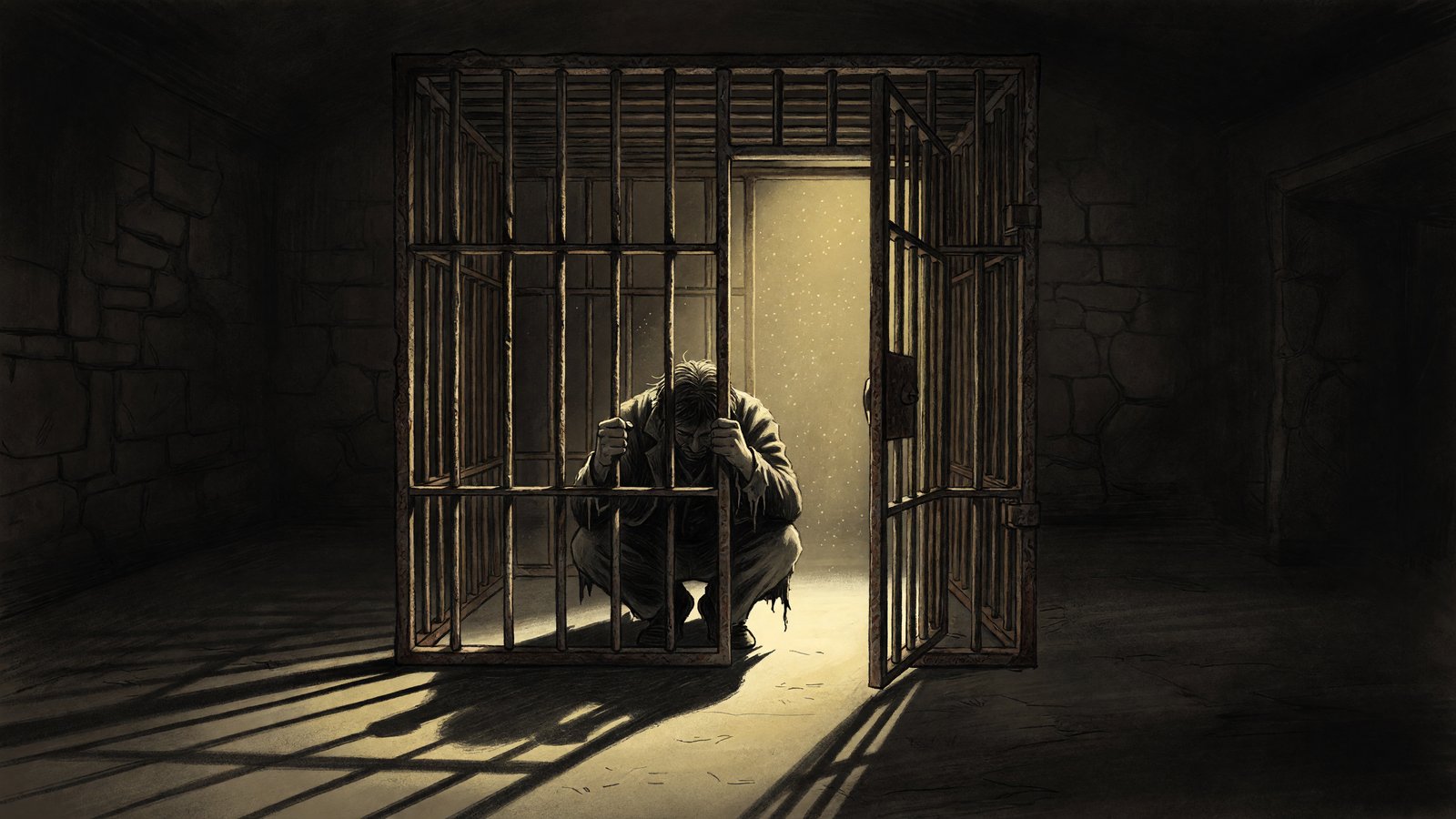
Maybe you know the feeling.
You are doing the things. Church on Sunday. The reading plan. The list of what you do not do, and it is a respectable list. And underneath all of it there is a grinding, low-grade exhaustion, because none of it is coming from anywhere. You are pushing the behavior uphill. Every act of obedience costs you something, and you are starting to wonder how long you can keep paying.
And somewhere in the quiet you have asked the question you would never say out loud: if this is the abundant life, why does it feel like a cage?
I want to talk to you about that question. But first I need to tell you what I learned about it in a place you would not expect: twenty years of trying to change the behavior of physicians.
You cannot mandate a heart
I have spent my career in physician leadership. Hospital turnarounds, quality crises, organizations in real trouble. And in every one of them, the approach to changing doctor behavior was the same: write a rule. Mandate it. Attach a bonus to compliance and a penalty to resistance.
It never worked. Not once, not durably. You can get temporary compliance out of a person with pressure, but the moment the pressure lifts, the behavior snaps back, because nothing inside the person ever changed. What the pressure does produce, reliably, is resentment, exhaustion, and disengagement. I watched brilliant, dedicated physicians, people who gave their lives to medicine, go gray and hollow under systems that treated them as compliance problems to be managed.
The author Daniel Pink gave me the language for what I was seeing. External carrots and sticks do not create lasting change in people. What changes people is internal: having a real stake in the work, growing in what they were made to do, and being connected to a purpose bigger than themselves. So I stopped writing mandates and started working on what my physicians actually wanted, deep down, to do. When I showed them the truth about their performance with respect instead of shame, ninety-five percent of them corrected course before I said a word. Nobody made them. Something in them wanted to.
Here is the point, and do not miss it: the standard never changed. The note still had to be signed. The quality bar did not drop one inch. What changed was where the obedience came from.
Hold that thought, because God said it first, and He said it about you.
The standard has not moved
Let me be clear about something before we go one step further, because this is where the message usually gets softened into uselessness.
The rules are not the problem.
“You shall be holy, for I am holy.” (1 Peter 1:16)
That is not an Old Testament leftover. Peter is quoting Leviticus to the church. The holiness standard is exactly as high as it ever was, and Jesus made sure nobody could claim otherwise: “Do not think that I have come to abolish the Law or the Prophets; I have not come to abolish them but to fulfill them.” (Matthew 5:17) Then He spent the rest of the sermon raising the bar. Not just murder but anger. Not just adultery but the look.
So if you have been hoping that grace means the list gets shorter, I cannot give you that. Nobody in Scripture can. Paul heard people drawing that conclusion in his own day and slammed the door on it: “Are we to continue in sin that grace may abound? By no means!” (Romans 6:1-2)
There are two ditches on either side of this road. One is legalism: grind out the list in your own strength until your heart turns to stone. The other is license: decide the list was the problem, soften the standard, and call your own preferences freedom. Both ditches are full of exhausted people. Both miss the same thing.
The standard was never the problem. The method was.
The letter kills
God ran the external-rules experiment before any of us. He wrote the standard in stone with His own finger. He specified it down to the fabric and the food. It was a perfect law, delivered perfectly. And Paul writes its epitaph in six words: “the letter kills, but the Spirit gives life.” (2 Corinthians 3:6)
Not because the law was bad. Because of what a rule imposed from outside can and cannot do. It can define holy. It cannot make you want it. It can measure the gap between you and the standard. It cannot close it. Press an external standard onto an unchanged heart for long enough and you do not get holiness. You get what I saw in those hospitals and what you may be feeling right now: compliance on the outside, stone on the inside, and a slow grinding exhaustion where the joy was supposed to be.
If that is where you are, doing everything right and dying under it, I want you to hear this: your exhaustion is not evidence that God’s standard is too strict. It is evidence that you are trying to meet it by a method God Himself declared dead.
The new location
Because when the external method failed, watch what God did. He did not lower the standard. He did not add enforcement. He announced a change of address.
“I will put my law within them, and I will write it on their hearts.” (Jeremiah 31:33)
“And I will give you a new heart, and a new spirit I will put within you. And I will remove the heart of stone from your flesh and give you a heart of flesh.” (Ezekiel 36:26)
Same law. Different location. Not carved into stone above you, where it can only condemn. Written into you, where it can finally live. That is the entire difference between the covenant that killed and the covenant that gives life. The rules do not disappear. They change direction. They stop being pressure applied from the outside and start being desire flowing from the inside.
Out of the abundance of the heart the mouth speaks. Jesus said that. (Luke 6:45) The behavior always follows the heart. Always. Which means the only question that matters is not “how do I force better behavior?” It is “what is my heart full of?” A heart of stone under pressure produces compliance, resentment, and collapse. A heart of flesh with the law written on it produces something the pressure never could: fruit. And fruit does not have to be forced off the tree. A healthy tree bears good fruit because of what it is. (Matthew 7:17)
That is what I was watching in those physicians who corrected course without being told. I could not create it. I could only stop suffocating it. But God does not merely stop suffocating your heart. He replaces it.
This is where repentance comes in
So how does the heart actually change? Not by trying harder. Trying harder is just the old method with more effort behind it, and you already know where it ends because you are living there.
The heart changes through repentance. Metanoia. The turn. You stop, you face the truth about what your heart is actually full of, and you turn to the only One who ever offered a transplant. Not behavior modification. Not a better system. A new heart, His Spirit in it, His law written on it, His desires slowly becoming yours.
And here is the kindness of God in all of it: He does not demand you produce the new heart. He offers to give it. “God’s kindness is meant to lead you to repentance.” (Romans 2:4) Not His pressure. Not His clipboard. His kindness. The turn is your part. The transplant is His.
This is why repentance cannot be softened into “God accepts you as you are, so relax.” He does receive you as you are. And He loves you too much to leave your heart made of stone. And it is why repentance also cannot be hardened into “get your act together first.” You cannot. Stone does not obey. Stone does not soften itself. Stone gets replaced.
Repentance is not the cage door closing tighter. It is the only door out.
The challenge
So here is where I will leave you, and I am not going to make it comfortable.
Look at your obedience and ask where it is coming from. Not whether it exists. Where it comes from. If the honest answer is pressure, fear, habit, reputation, or the grim determination to be good, then hear me: the standard is not your enemy, but your method is killing you, and no amount of trying harder will fix a heart of stone. That is not a tweak. That calls for a turn.
And if the honest answer is that you have quietly lowered the bar, softening the standard, renaming your preferences “freedom,” deciding the rules were the problem, then hear this too: God has not moved. Be holy, for I am holy still stands. Grace was never permission to do your own thing. It is the power to finally want His.
Either way, the invitation is the same, and it is open right now. Stop defending the stone. Turn. Ask Him for the heart He promised through Ezekiel. Not an improved version of the old one. A new one. Then watch what happens to the rules. They will not vanish. They will migrate. Off your back, into your chest. From cage to compass.
Will you keep pushing the behavior uphill? Or will you let Him change what is at the bottom of it?
Father, I have been obeying You from the outside and it is killing me. I do not ask You to lower the standard. I ask You to change my heart. Take the stone. Give me the heart of flesh You promised. Write Your law where I actually live, so that holiness stops being a weight I carry and becomes the fruit of who You are making me. I turn. In Jesus’ name, amen.